

Believe in your future as a Python Developer
Our comprehensive curriculum is designed to provide you with the knowledge and skills needed to become a professional Python Developer. The course will be taught using industry-standard practices, giving students the ability to go from complete beginners to absolute masters.
Even if you have ZERO coding experience, this course is for you.
Companies that hire Python Developers
Why Learn With Us?
Build A Solid Programing Foundation

Avoid the mistake that traps 99% of people: rushing into a bootcamp without a solid foundation. Many feel lost and discouraged in the beginning because of this, and it's why most people quit within a few weeks. Don't make this costly error! We focus on building a strong, solid foundation from which you are guaranteed a smooth and rewarding learning journey.
Build A Solid Programing Foundation
Avoid the mistake that traps 99% of people: rushing into a bootcamp without a solid foundation. Many feel lost and discouraged in the beginning because of this, and it's why most people quit within a few weeks. Don't make this costly error! We focus on building a strong, solid foundation from which you are guaranteed a smooth and rewarding learning journey.
We believe in the power of beginnings and understand that everyone starts their journey from scratch. With us, you can confidently embark on your coding adventure, regardless of your prior experience – even if it's zero! Our dedicated team is committed to guiding you every step of the way, ensuring your success at every milestone.
Beginner Friendly and Advanced Friendly

Beginner Friendly and Advanced Friendly
We believe in the power of beginnings and understand that everyone starts their journey from scratch. With us, you can confidently embark on your coding adventure, regardless of your prior experience – even if it's zero! Our dedicated team is committed to guiding you every step of the way, ensuring your success at every milestone.
Time Flexibility
You will have unltimate flexibility in designing your learning journey. Tailor the number of hours you dedicate each week to your liking, and select the most convenient times that align with your schedule. Take charge and enjoy total control over your learning experience!
Time Flexibility
You will have unltimate flexibility in designing your learning journey. Tailor the number of hours you dedicate each week to your liking, and select the most convenient times that align with your schedule. Take charge and enjoy total control over your learning experience!
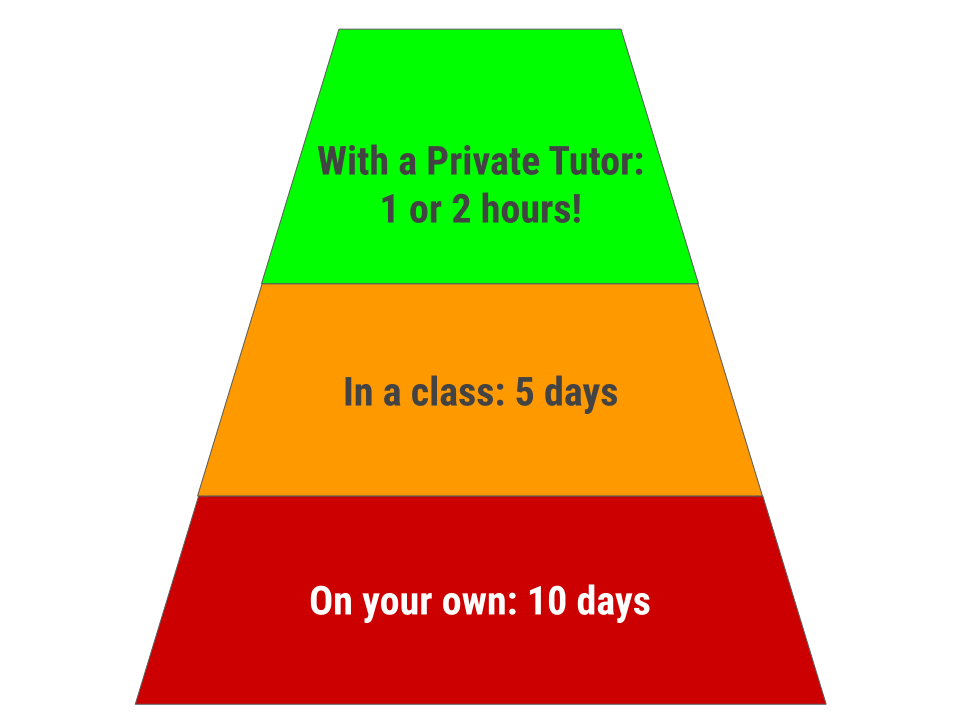
After our program, you'll effortlessly grasp and understand any new Python code or program within minutes. This skill usually takes years of trial and error to develop, but we provide a shortcut to success. The common challenge is not knowing what you don't know, but with a private tutor, you'll receive step-by-step guidance for guaranteed success.
Huge Amount of Time Saved
Time Needed to Learn For Loops
Huge Amount of Time Saved
After our program, you'll effortlessly grasp and understand any new Python code or program within minutes. This skill usually takes years of trial and error to develop, but we provide a shortcut to success. The common challenge is not knowing what you don't know, but with a private tutor, you'll receive step-by-step guidance for guaranteed success.
Time Needed to Learn For Loops
Project Based Learning

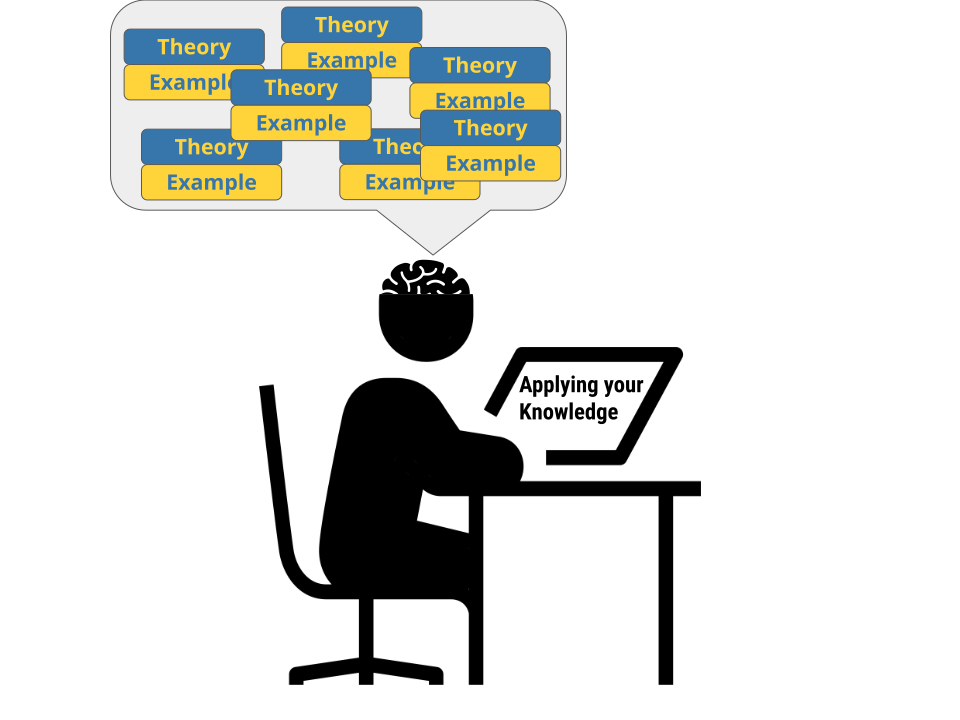
Each section you explore consists of multiple lessons, carefully designed to enhance your understanding. Each lesson begins with a theoretical explanation of the concept, emphasizing its significance and purpose. Next, we provide practical examples to solidify your comprehension. Finally, we culminate each lesson with a mini project that integrates all the learned concepts. By applying these lessons to real-world scenarios, you'll gain valuable insight into their practical applications.
Project Based Learning
Each section you explore consists of multiple lessons, carefully designed to enhance your understanding. Each lesson begins with a theoretical explanation of the concept, emphasizing its significance and purpose. Next, we provide practical examples to solidify your comprehension. Finally, we culminate each lesson with a mini project that integrates all the learned concepts. By applying these lessons to real-world scenarios, you'll gain valuable insight into their practical applications.
At 2M Python Development, we uphold a core belief that drives our approach: Doing is superior to watching. Unlike many YouTube videos, courses, and bootcamps where you passively observe others writing code, our objective is to transform you into an exceptional Python developer and a master problem solver. That's why, with each new concept you learn, we provide mini challenges that require your active participation. These challenges, supervised by your instructor, empower you to independently apply your knowledge and receive guidance for successful completion.
Practice, Practice, PRACTICE!
Practice, Practice, PRACTICE!
At 2M Python Development, we uphold a core belief that drives our approach: Doing is superior to watching. Unlike many YouTube videos, courses, and bootcamps where you passively observe others writing code, our objective is to transform you into an exceptional Python developer and a master problem solver. That's why, with each new concept you learn, we provide mini challenges that require your active participation. These challenges, supervised by your instructor, empower you to independently apply your knowledge and receive guidance for successful completion.
Ready to start the journey now?Our advisor will fill you in
Book a completely FREE 10 minute call
Possible Career Paths
Data Analyst
Average Salary: $71,034*
The Data Analyst serves as a gatekeeper for an organization’s data so stakeholders can understand data and use it to make strategic business decisions.
BI Analyst
Average Salary: $87,815*
Business Intelligence Analysts analyze data sets to discover insights, often used for important decision-making strategies throughout an organization.
AI Engineer
Average Salary: $145,898*
Business Intelligence Analysts analyze data sets to discover insights, often used for important decision-making strategies throughout an organization.
Data Scientist
Average Salary: $126,687*
Data Scientists gather and analyze large sets of structured and unstructured data. They interpret results to create actionable plans for their organizations.
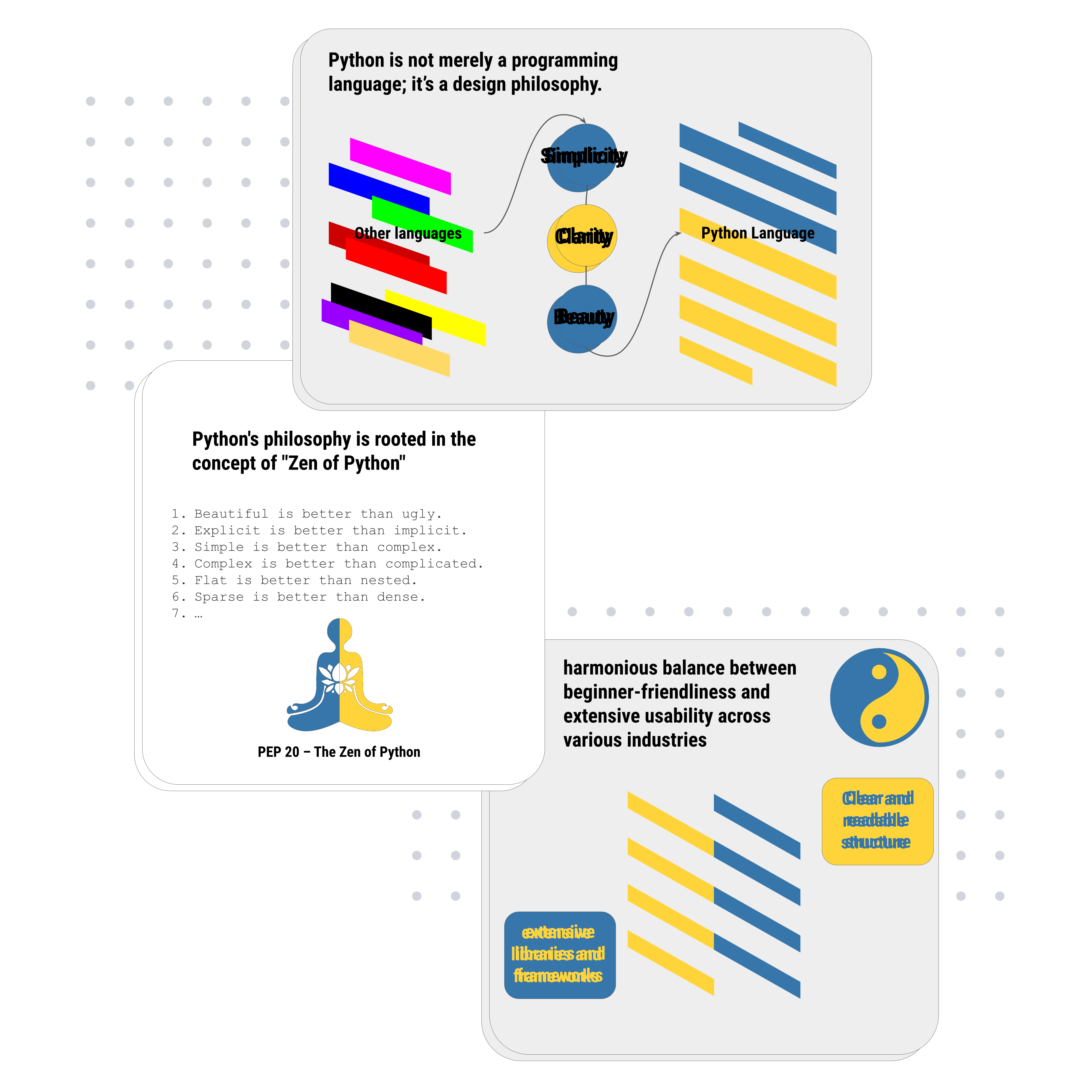
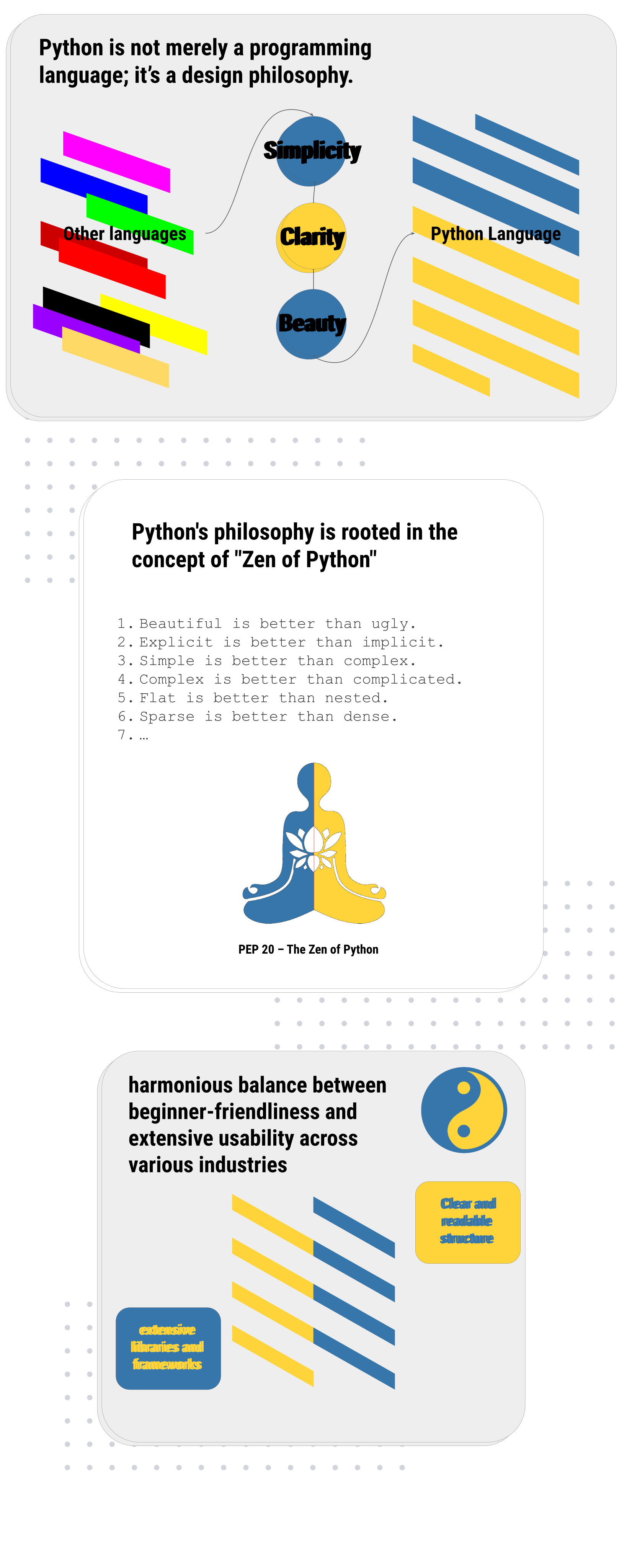
Why Python Language?
Ready to start the journey now?Our advisor will fill you in
Book a completely FREE 10 minute call
2M Python
MasterClass Curriculum
Phase 1: Professional Python Coding
Level 1: The Basics
How We Built Our Course Curriculum
Our course has been carefully developed over the years, learning from our experiences and feedback, to give kids the best learning experience. We keep updating it to stay current, but we always stick to our core principles of teaching Python programming in a fun and engaging way, helping children build a strong foundation for a successful future.
These are our principles:
Doing > Watching this is why we have challenges at with every lesson
Understanding WHY we're doing is as important as the HOW we are doing it
Programing is better when it's done in the most FUN way possible
Slowly building a solid foundation is better than quickly building on quicksand
Section 1:Introduction (4 lessons)
Get essential setup instructions and expert tips to easily navigate the course. Learn how to set up your environment, tackle fun challenges, and make the most of your learning experience in this easy-to-follow introductory section.
Download Python
Download IDE (software to write code in)
Create our first project
And talk about the course
Section 2: Building The Foundation (18 Lessons)
We build a strong foundation for your child's future projects, covering essential Python and programming concepts. By exploring how coding works, your child will gain a clear understanding of its basics and principles.
Our first program
Printing in Python
String and Special Characters
Creating Variables
String Data Types
Handling Data Using Various Slicing and String
and string operators
Section 3: First Steps In Python (14 Lessons)
We explore the core elements of coding: blocks and statements. These are the foundation of Python and programming as a whole. Your child will understand how code runs using parameters and different expressions, gaining a comprehensive understanding of how it all works.
Introduction to Blocks and Statements
if statements, elif statements and else
Debugging in IntelliJ
Testing Operators
Complex Expressions AND / OR
Simplified Chained Comparison
Truth Value Testing
Using "in" and "not in"
Section 4: Loops In Python (18 Lessons)
Many children face challenges with Python loops, which can seem intimidating. However, with a solid foundation and our exceptional explanations, your child will navigate examples with ease. Each challenge is designed to maximize their understanding and knowledge.
Introduction To for loops
Debugging Loops
for loops over a Range
Nested Loops
Using Break and Continue in Loops
Introduction To while loops
else Statements in loops
Section 5: Data Handling Using Lists (25 Lessons)
In this section, we focus on essential data handling and manipulation in Python. Using its versatile libraries, your child will learn fundamental structures like lists. With a solid foundation, we use project-based approaches to enhance and apply their newfound knowledge.
Introduction to Sequence Types
Mutable and Immutable Objects
Iterating Over a List
The enumerate Function
Removing Items from a List
Creating and Sorting Lists
Safely Deleting Items From a List
Nested Lists
Level 2: Intermediate Topics Explored
Section 6: Functions In Python (16 Lessons)
This section marks an important milestone in your child's Python journey, as they reach the intermediate level. They will explore the transformative power of functions, learning to break down code into modular components. Mastering functions is crucial for efficient and dynamic coding. With focus and patience, your child will excel in this essential lesson.
Defining Functions in Python
Parameters and Arguments
Debugging Our Parameters
Functions Calling Functions
Returning Values and None
Handling Invalid Arguments
Default Parameter Values
Writing a Fibonacci function (mini project)
Function annotations and type hints
Star Args (*args)
Section 7: Object Oriented Python (24 Lessons)
Object-Oriented Programming (OOP) is crucial in modern applications and programs. Despite its intimidating reputation, we simplify every aspect for your child. Through 2-3 mini projects, your child will gain confidence and be well-prepared to transition to any programming language seamlessly.
Object Orientated Programming and Classes
Instances, Constructors, Self and more
Class Attributes
Methods and Static Methods
Attribute Accessibility
Getters and Setters
Data Attributes and Properties
Inheritance
Subclasses and Overloading
Section 8: Data Handling Using Dictionaries (23 Lessons)
Welcome back to the world of data handling. In this section, your child will explore powerful Python tools: dictionaries and sets. While these are more complex than lists and tuples, they offer unmatched flexibility in data manipulation. Our step-by-step approach makes these concepts easily comprehensible, allowing your child to expand their skills and unleash new possibilities.
Introduction to Dictionaries
Iterating over a Dictionary
Adding, Changing and Removing Items to a Dictionary
Computer Building (mini project)
Creating, Updating and Values Dictionaries
Shallow and Deep Copy with Dictionaries
Level 3: Practical Real World Skills in Python
Section 9: Reading and Writing Files (18 Lessons)
In the advanced stage of Python, your child will learn to work with external files. They will master file handling, whether local or streamed, and dive into various file types. With multiple examples and tests, your child will sharpen their skills and gain essential file reading and writing proficiency, solidifying their future career prospects.
Opening, Reading and Parsing Text Files
Parsing and Using Data from a Text File
Writing Data to a Text File
JSON files 101
Streaming JSON Files Using urllib
Section 10: Database Implementation In Python (29 Lessons)
While mastering Python, your child will also be introduced to SQL—a powerful language. Acquiring SQL skills complements their Python knowledge and empowers their journey in data analysis, science, or AI development. Our comprehensive approach to database management demystifies SQL, allowing your child to explore the captivating world of data manipulation.
Databases 101
SQLite 101
UPDATE, DELETE and WHERE
Database Administration
ORDER BY and JOIN our Tables
LIKE Wildcards and creating Views
Restoring Backups and Function
Database SQL in Python
Committing Changes
Level 4: Exercises and Projects
Section 11: Python Exercises (10 Exercises)
Dive into Python with 10 exercises designed to enhance your skills.
Exercise 1: Number Guessing
Exercise 2: Summing Numbers
Exercise 3: Pig Latin
Exercise 4: Lists Exercise
Exercise 5: Dictionary Login System
Exercise 6: Function Inventory System
Exercise 7: Functions and Files Inventory System Continued
Exercise 8: OOP Banking System
Exercise 9: Library Management System
Exercise 10: Restaurant Menu Manager
Project 1: Mastermind
While mastering Python, we introduce SQL—a powerful language. Acquiring SQL skills complements your Python knowledge, empowering your journey in data analysis, science, or AI development. Our comprehensive database management approach demystifies SQL. Explore the captivating world of data manipulation.
What you will learn:
Advanced Python programming techniques.
Complex problem-solving skills.
Code design and organization.
Strategic thinking and planning.
Debugging and testing code effectively
Building a Caesar Cipher with GUI in Python
Learn to build a Caesar Cipher in Python, enhanced with a Tkinter GUI for user-friendly interaction. This project covers user input validation, string manipulation, and basic GUI elements, providing a practical introduction to encryption and application development.
What you will learn:
Variables and Constants
User Input and Validation
Conditional Statements
For Loops and While Loops
Conditional Statements
String Manipulation and Encryption Logic
Decryption Addition
Modular Coding
Graphical User Interfaces Using TKinter
Project 3: Tic Tac Toe
In our advanced stage, your child will work on an exciting Tic Tac Toe project with AI. This project helps them strengthen their Python skills and introduces them to artificial intelligence. With clear guidance, your child will understand code design and strategy, preparing them for future programming tasks. The Tic Tac Toe project is both educational and enjoyable, keeping your child engaged and growing in their coding journey.
What they will learn:
Advanced Python programming techniques.
Fundamentals of artificial intelligence.
Effective code design and organization.
Strategic thinking and AI implementation.
Techniques for debugging and testing code.
Phase 2: Machine Learning / Data Science
Level 1: Getting Familiar With The Basics
In this section, we dive into pandas, the go-to tool for data wrangling in data science and machine learning. Think of pandas as your trusty sidekick, making it easy to organize, clean, and analyze data with just a few lines of code. Let’s make data our playground!
What is Pandas?
Data Exploration
Working With Dataframes
Select and Visualizing Data
Modifying Data
Applying Functions to Dataframes
In this section, we’ll explore NumPy, the powerhouse for numerical computing in data science and machine learning. Imagine it as your mathematical toolbox, packed with efficient tools to handle large arrays and complex calculations. With NumPy, crunching numbers becomes a breeze, turning data into insights with ease!
Understanding Numpy
Creating Numpy Arrays
Operating on Arrays
Variance and Deviation
Mini Project: Car Sales
Converting Images To Data
Level 2: Delving Deeper
In this section, we’ll get creative with Matplotlib, the go-to library for visualizing data. Picture it as your artist's palette, where you can turn raw data into beautiful, insightful graphs and charts. Whether it's trends, patterns, or distributions, Matplotlib helps you see the story your data is telling!
What is Matplotlib
Basic Plotting
Figure and Axes Structures
Historgrams and Subplots
Pandas Plotting
Using OO Plotting
Plot Customization
In this section, we’ll dive into scikit-learn, your all-in-one toolkit for machine learning. Think of it as your personal AI assistant, packed with algorithms and tools to build, train, and test models effortlessly. From predicting outcomes to uncovering patterns, scikit-learn helps you bring your data-driven ideas to life!
What is Scikit Learn?
Splitting Data
Canverting Data
Handling Missing Values
Choosing a Model
Regression Models
Classification Models
Making Predictions
Cross Validation - Model Evaluation
ROC Curve - Model Evaluation
Confusion Matrix - Model Evaluation
Classification Report - Model Evaluation
R2 Score
MAE and MSE
Randomized Search CV
Grid Search CV
Level 3: Milestone Projects
In this section, we’ll tackle a hands-on project using the Titanic dataset from Kaggle, applying everything we’ve learned about supervised learning. Think of it as a real-world challenge where we’ll predict who survives the voyage, using classification techniques. It’s the perfect way to see our skills in action!
Exploring Data
Finding Patterns
Finding Correlation
Preparing Data
Setting Our Model
Tunning/Improving Our Model
Evaluationg Our Model
Visualizing our Evaluations
In this section, we’ll dive into time series analysis with a regression project using the Bluebook for Bulldozers dataset from Kaggle. Imagine predicting the future value of bulldozers! We’ll use our skills to analyze trends over time, making this a great opportunity to apply our regression knowledge to real-world data.
Data Exploration
Data Engineering
Missing Numeric Values
Training Our Models
RMSEL Custom Evaluation
Faster Model Training
Making Predictions
Feature Importance
Phase 3: AI and LLM Engineering Course
Level 1: Core LLM Product Foundations
In this section, we’ll turn LLMs from “cool demo” into a real product. You’ll learn how to talk to models like ChatGPT through code, design prompts that actually work, and wrap everything in a simple app you can show to others.
What large language models are and how they work at a high level
Calling LLMs through an API from Python
Understanding tokens, context windows, and pricing
Writing effective prompts for different tasks
Handling model responses safely and reliably
Building a simple end-to-end LLM-powered feature
In this section, we’ll go beyond plain text and build a chatbot that sees and interacts through a user-friendly UI. You’ll combine LLMs with Gradio to accept text and files, then add simple “agent” behavior so your bot can take useful actions.
Building interactive chat UIs with Gradio
Accepting text, images, or files from users
Connecting your UI to one or more LLM backends
Adding buttons, sliders, and other controls to your app
Introducing tool calls and simple agent-style workflows
Deploying your multi-modal chatbot for others to try
In this section, we’ll explore the open-source Gen AI ecosystem using Hugging Face. You’ll learn how to pick, run, and combine models for tasks like text generation, classification, and summarization, all inside your own codebase.
Navigating Hugging Face Hub and model cards
Using pipelines for quick NLP and generation tasks
Loading and running transformer models locally or via API
Comparing open-source models to hosted frontier models
Handling performance, latency, and hardware constraints
Packaging your open-source workflow into a reusable script
Level 2: Retrieval, Evaluation & Fine-Tuning
In this section, you will learn how to objectively compare different LLMs instead of guessing which one “feels” better. You will design simple evaluations, measure quality, speed, and cost, and turn the results into clear model choices for real projects.
Designing evaluation tasks from real coding and business use-cases
Building a small benchmark set of prompts and expected behaviors
Running the same tests across multiple models with the API
Logging outputs, latency, and cost for each model
Scoring responses for correctness, clarity, and safety
Summarizing results in a short “model report” to guide decisions
In this section, you will connect LLMs to your own data using Retrieval-Augmented Generation (RAG). You will build a system that searches documents, retrieves the right pieces, and lets the model answer questions grounded in real information.
Understanding embeddings, vector search, and why RAG is needed
Splitting and chunking documents for better retrieval
Storing and querying embeddings in a vector database
Wiring a basic RAG chain with LangChain (retriever + LLM)
Handling hallucinations and improving answer grounding
Evaluating RAG quality with sample queries and tests
In this section, you will take a strong base model and specialize it for your own task using parameter-efficient fine-tuning. You will learn how LoRA/QLoRA works in practice and walk through the full workflow from dataset to deployed adapter.
Preparing and cleaning a small fine-tuning dataset
Formatting instruction-style examples for chat models
Applying LoRA/QLoRA using a common training library
Monitoring loss, overfitting, and training stability
Merging and loading adapters for inference
Comparing base vs fine-tuned behavior on real prompts
Level 3: Advanced Applied LLM Systems
In this section, you will build a practical forecasting project: an open-source model fine-tuned to predict prices. You will go from raw tabular data to a trained model, then plug it into a simple interface that non-technical users can try.
Understanding the business problem and target metrics
Cleaning, encoding, and splitting historical price data
Choosing and training a suitable open-source model
Evaluating predictions with common regression metrics
Exposing the model through a small API or UI
Comparing your fine-tuned model to a stronger paid option
In this section, you will move from single-model tools to multi-agent systems where several LLM “roles” collaborate. You will design planners, workers, and reviewers that use tools in loops, coordinate through messages, and work toward a shared goal.
Defining agent roles (planner, executor, critic, etc.)
Letting agents communicate through structured messages
Using tools (APIs, code execution, search) inside agent loops
Implementing simple goal-tracking and stopping conditions
Handling failure modes, loops, and safety checks
Building a small multi-agent demo that solves a realistic task
How We Built Our Course Curriculum
Our course has been meticulously crafted over the years, incorporating valuable insights from trials, errors, and feedback, to provide you with an unparalleled learning experience. While constantly evolving and adapting to stay current, we remain steadfast in our commitment to the fundamental principles and core beliefs that underpin our approach to teaching Python programming and preparing you for a successful career in the field.
These principles are as follows:
Doing > Watching this is why we have challenges at with every lesson
Understanding WHY we're doing is as important as the HOW we are doing it
Programing is better when it's done in the most FUN way possible
Slowly building a solid foundation is better than quickly building on quicksand
Section 1:Introduction (4 lessons)
Essential setup instructions and expert guidance for seamless course navigation. Learn how to configure your environment, do the challenges, and optimize your learning experience in this comprehensive introductory section.
Download Python
Download IntelliJ
Set up project SDK
And talk about the course
Section 2: Getting Started In Python (18 Lessons)
We lay a solid foundation for future projects, exploring essential concepts in Python and programming. By delving into the inner workings of coding, you'll gain a profound understanding of its principles and mechanics.
Our first program
Printing in Python
String and Special Characters
Creating Variables
String Data Types
Handling Data Using Various Slicing and String
and string operators
Section 3: First Steps In Python (14 Lessons)
We explore the core elements of code: blocks and statements. They are the foundation of Python and programming as a whole. Understand how code executes with parameters and different expressions, gaining a comprehensive perspective on their functionality.
Introduction to Blocks and Statements
if statements, elif statements and else
Debugging in IntelliJ
Testing Operators
Complex Expressions AND / OR
Simplified Chained Comparison
Truth Value Testing
Using "in" and "not in"
Section 4: Loops In Python (18 Lessons)
Here, many face challenges. Python loops may seem intimidating, but with your solid foundation and our exceptional explanations, you'll navigate examples with ease. Tackle each challenge for maximum knowledge extraction.
Introduction To for loops
Debugging Loops
for loops over a Range
Nested Loops
Using Break and Continue in Loops
Introduction To while loops
else Statements in loops
Random Number Generator
High-Low Project
Binary Search Algorithm
Section 5: Data Handling Using Lists and Tuples (25 Lessons)
In this section, we explore essential data handling and manipulation in Python. Leveraging its versatile libraries, we dive into fundamental structures like lists and tuples. With a solid foundation, we embrace project-based approaches to enhance our newfound knowledge.
Introduction to Sequence Types
Mutable and Immutable Objects
Iterating Over a List
The enumerate Function
Removing Items from a List
Creating and Sorting Lists
Safely Deleting Items From a List
Nested Lists
Introduction To Tuples
Unpacking a Tuple
Nested Data Structures
Deeper Into Nesting
Section 6: Functions In Python (16 Lessons)
This section signifies a milestone in your Python journey, reaching the intermediate level. Explore the transformative power of functions, breaking down code into modular components. Mastering functions is vital for efficient and dynamic coding. Approach this section with focus and patience to excel in this essential lesson.
Defining Functions in Python
Parameters and Arguments
Debugging Our Parameters
Functions Calling Functions
Returning Values and None
Handling Invalid Arguments
Default Parameter Values
Writing a Fibonacci function (mini project)
Function annotations and type hints
Star Args (*args)
Section 7: Object Oriented Python (24 Lessons)
Object-Oriented Programming (OOP) is paramount in modern applications and programs. Despite its intimidating reputation, we meticulously simplify every aspect. With 2-3 mini projects, you'll confidently transition to any language or career path seamlessly.
Object Orientated Programming and Classes
Instances, Constructors, Self and more
Class Attributes
Methods and Static Methods
Attribute Accessibility
Getters and Setters
Data Attributes and Properties
Inheritance
Subclasses and Overloading
Polymorphism
Composition
Section 8: Data Handling Using Dictionaries and Sets (23 Lessons)
Welcome back to the world of data handling. Explore powerful Python tools: dictionaries and sets. While more complex than lists and tuples, they offer unmatched data manipulation flexibility. Our step-by-step approach makes them easily comprehensible. Expand your skills and unleash new possibilities!
Introduction to Dictionaries
Iterating over a Dictionary
Adding, Changing and Removing Items to a Dictionary
Computer Building (mini project)
Creating, Updating and Values Dictionaries
Shallow and Deep Copy with Dictionaries
Introduction to Sets
Erasing, Removing and Discarding Items from a Set
Set Union, Intersection and Difference
Subsets and Supersets
Section 9: Reading and Writing Files (18 Lessons)
In the advanced stage of Python, we explore working with external files. Master file handling, whether local or streamed. Dive into various file types, sharpening your skills with ample examples and tests. Solidify your career with essential file reading and writing proficiency.
Opening, Reading and Parsing Text Files
Parsing and Using Data from a Text File
Writing Data to a Text File
JSON files 101
Streaming JSON Files Using urllib
CSV files 101
Understanding Dialect and Sniffer
Writing a CSV file
Reading with DictReader
Writing with DictWriter
How to use DictWriter without a Dictionary
Section 10: Database Implementation In Python (29 Lessons)
While mastering Python, we introduce SQL—a powerful language. Acquiring SQL skills complements your Python knowledge, empowering your journey in data analysis, science, or AI development. Our comprehensive database management approach demystifies SQL. Explore the captivating world of data manipulation.
Databases 101
SQLite 101
UPDATE, DELETE and WHERE
Database Administration
ORDER BY and JOIN our Tables
LIKE Wildcards and creating Views
Restoring Backups and Function
Database SQL in Python
Committing Changes
How To Hack (Kind of)
Placeholders and Parameter Substitution
Introduction to Exceptions
Bank Account (mini project)
Creating Netflix (sort of) (mini project)
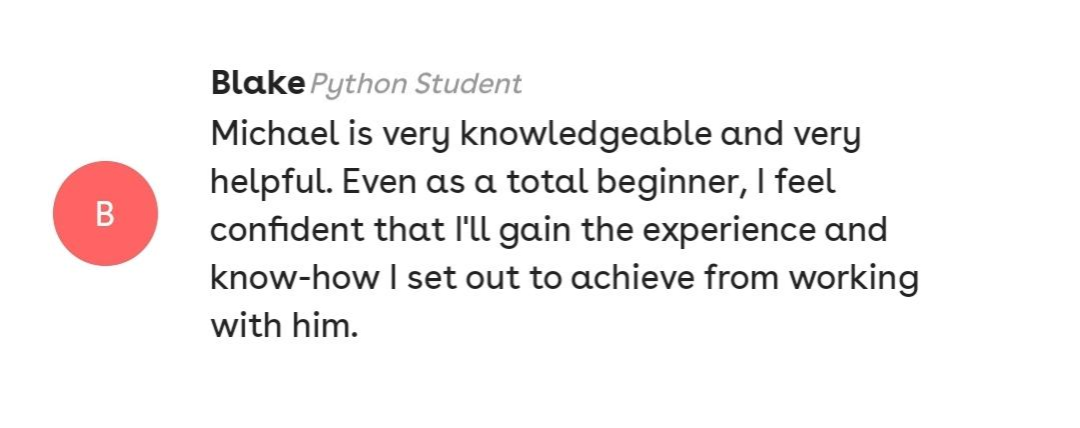
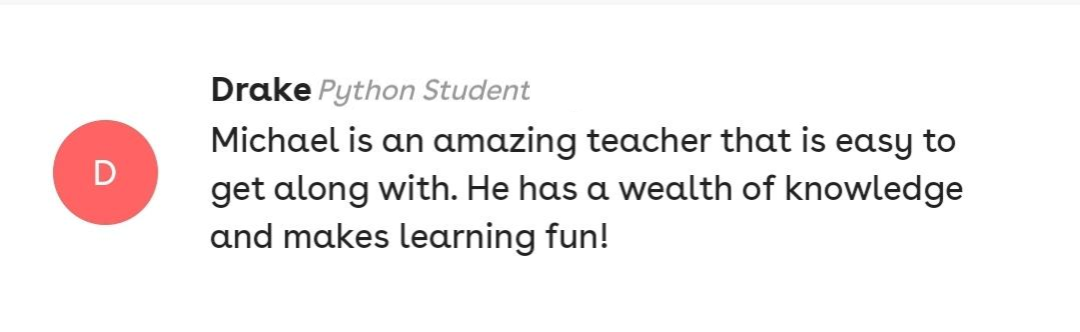
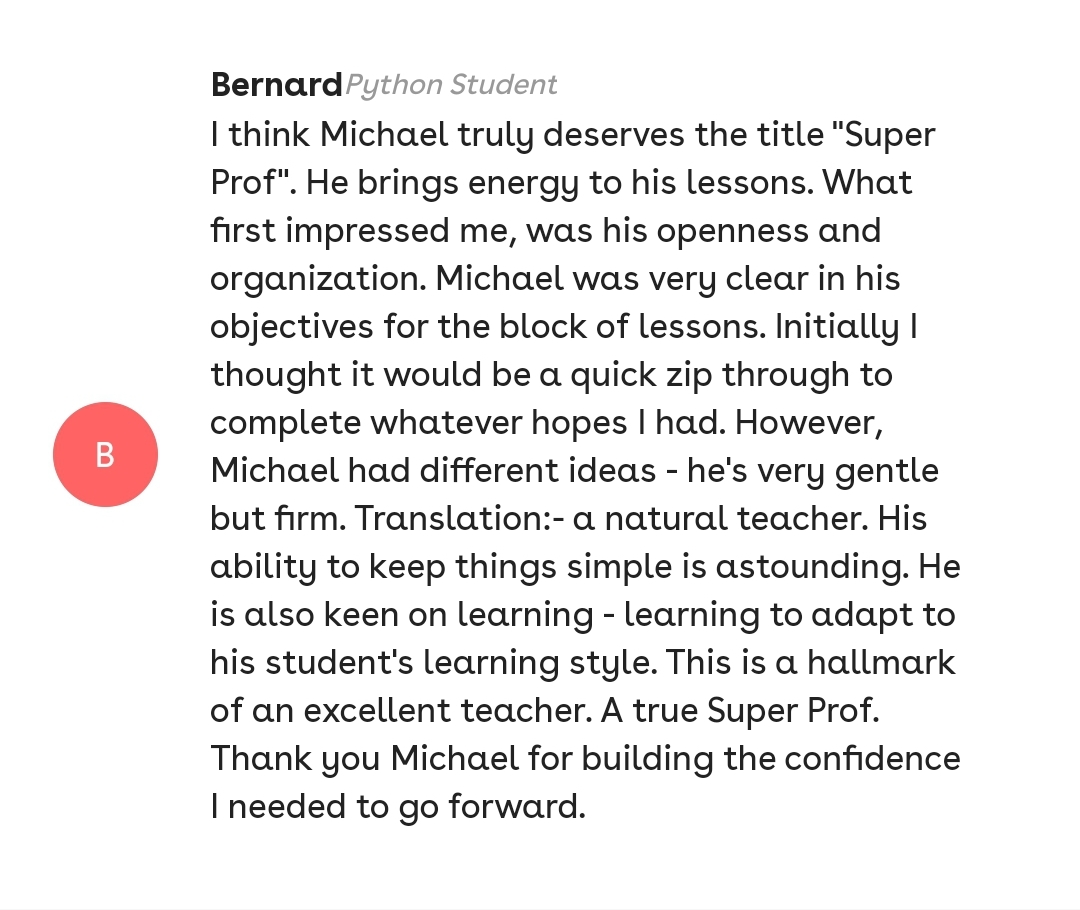
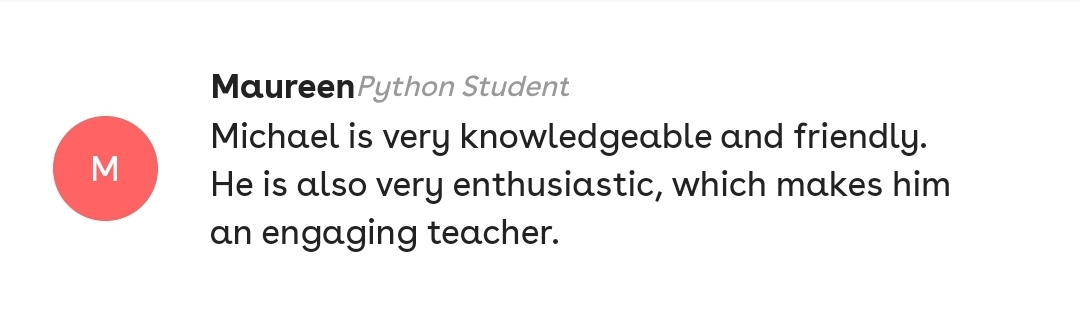
Student Success Stories
Not sure if our course is right for you? Hear from students who’ve been where you are. These students took charge of their futures, enrolled in our Python Programing course, and jumped head-first into an exciting career.
Here are some of our students reviews so far

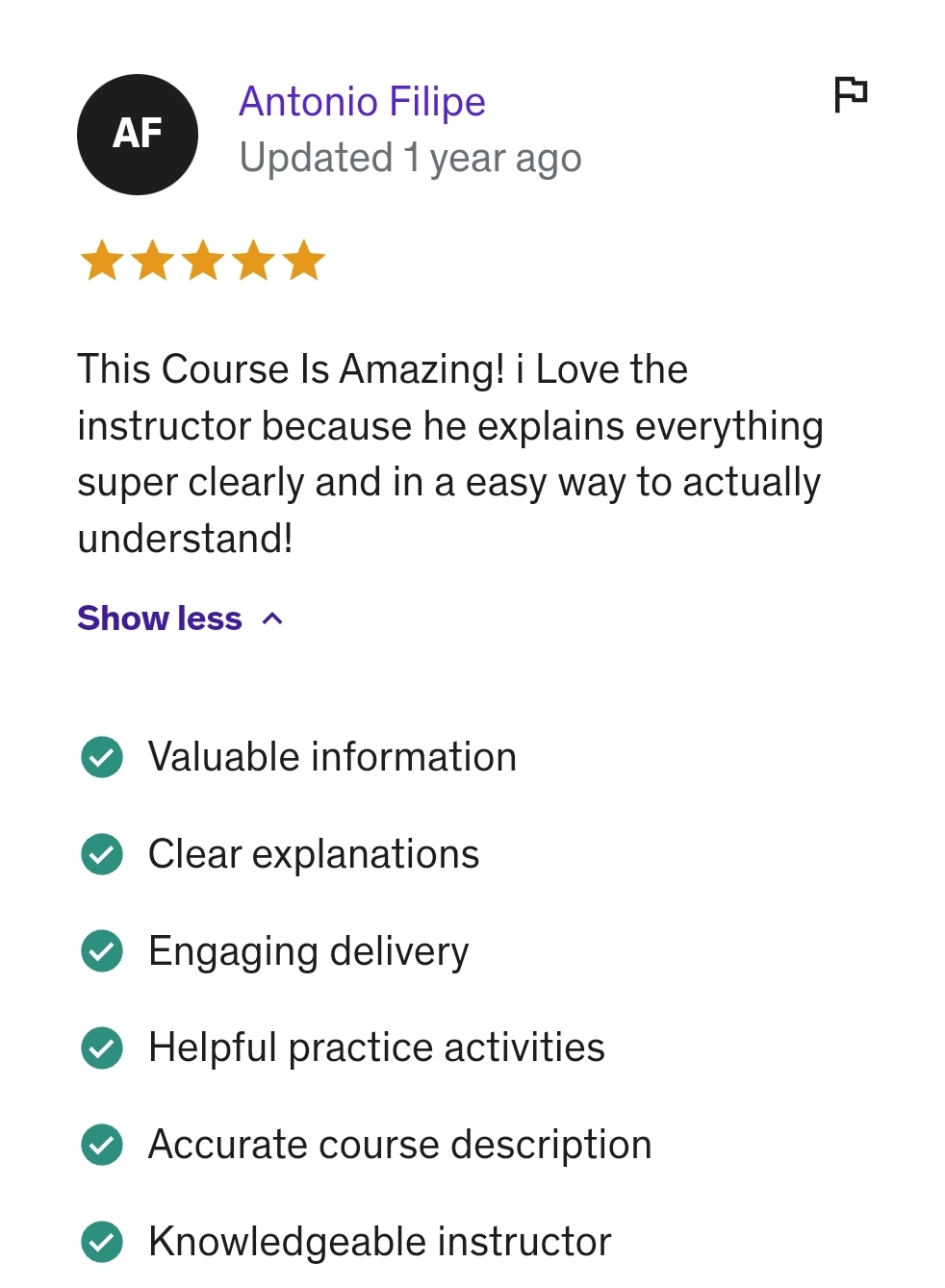
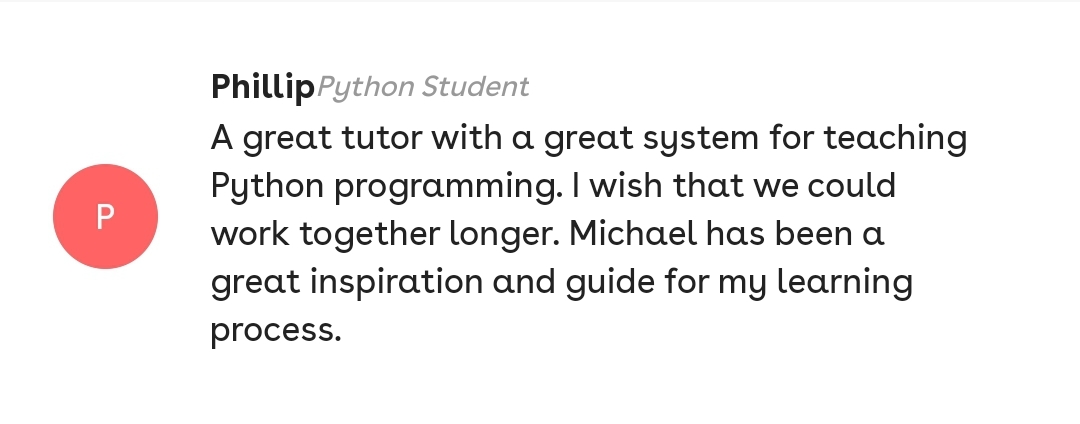
"Very Happy I started!"


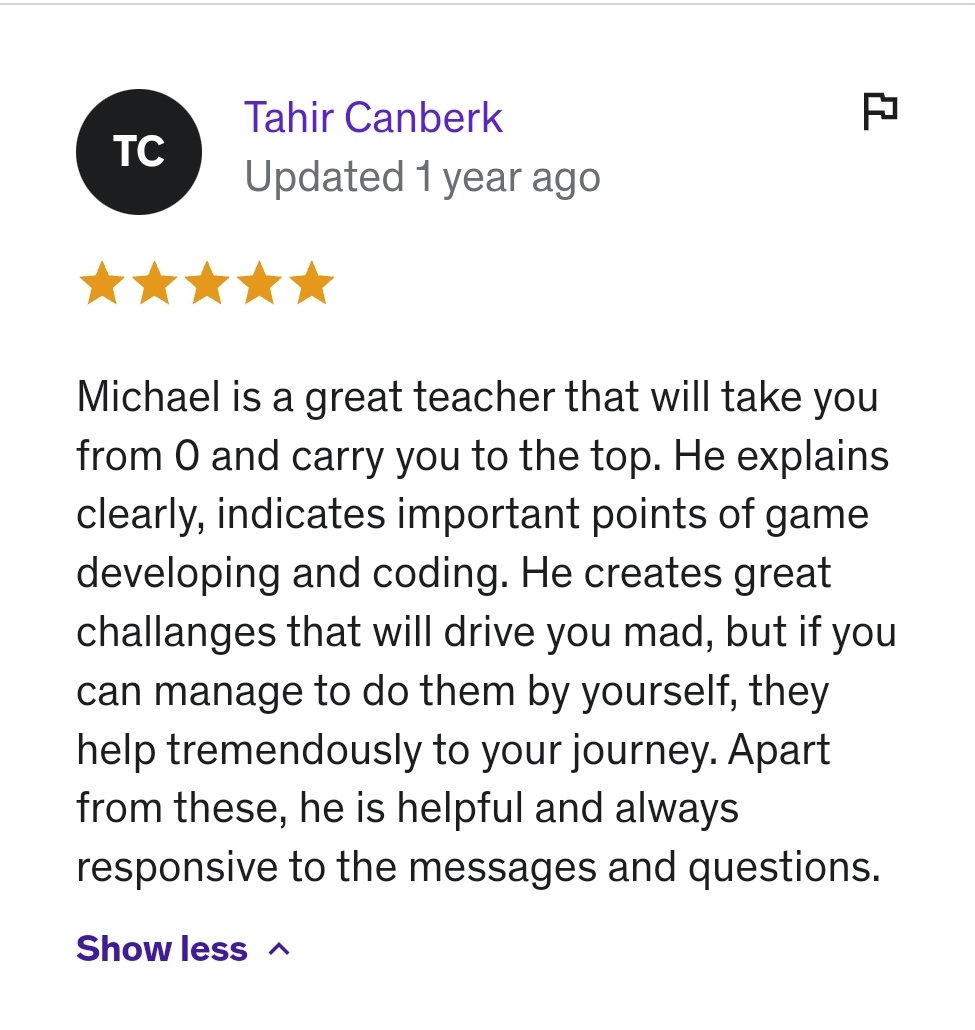
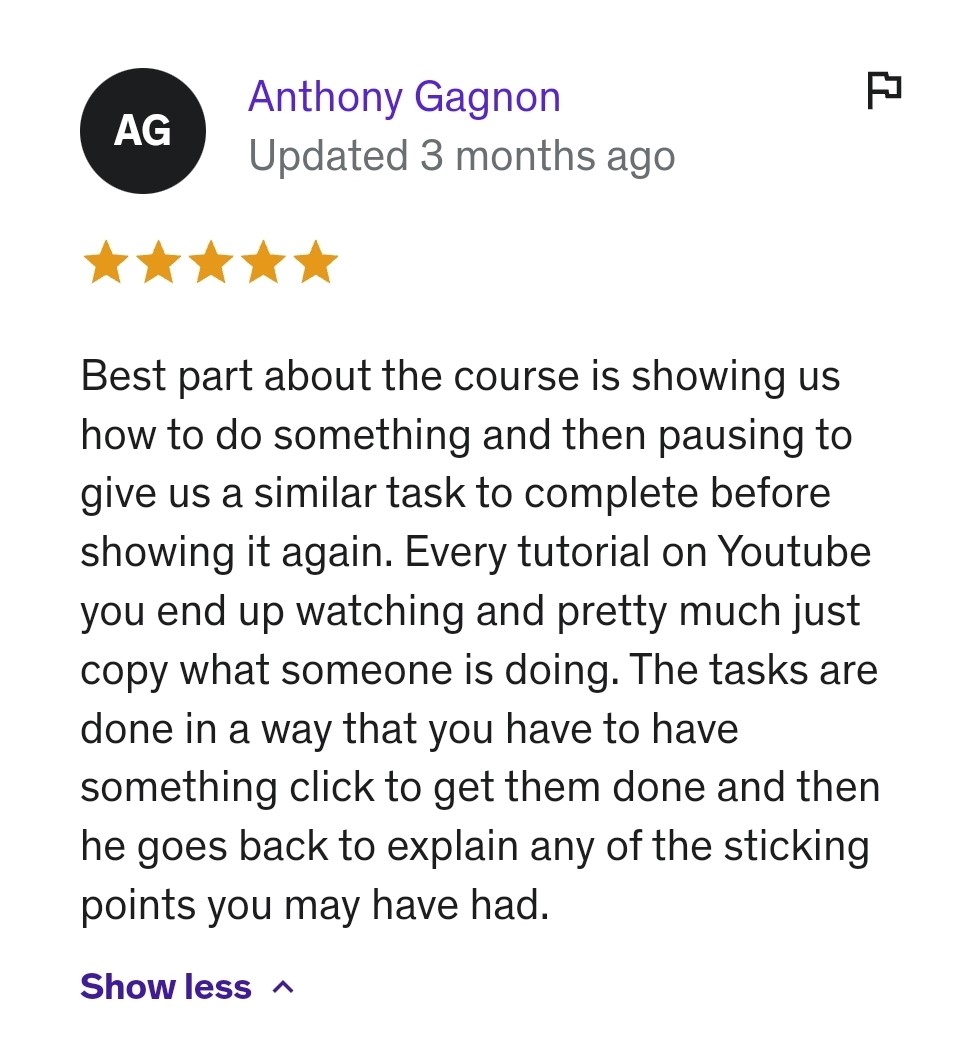
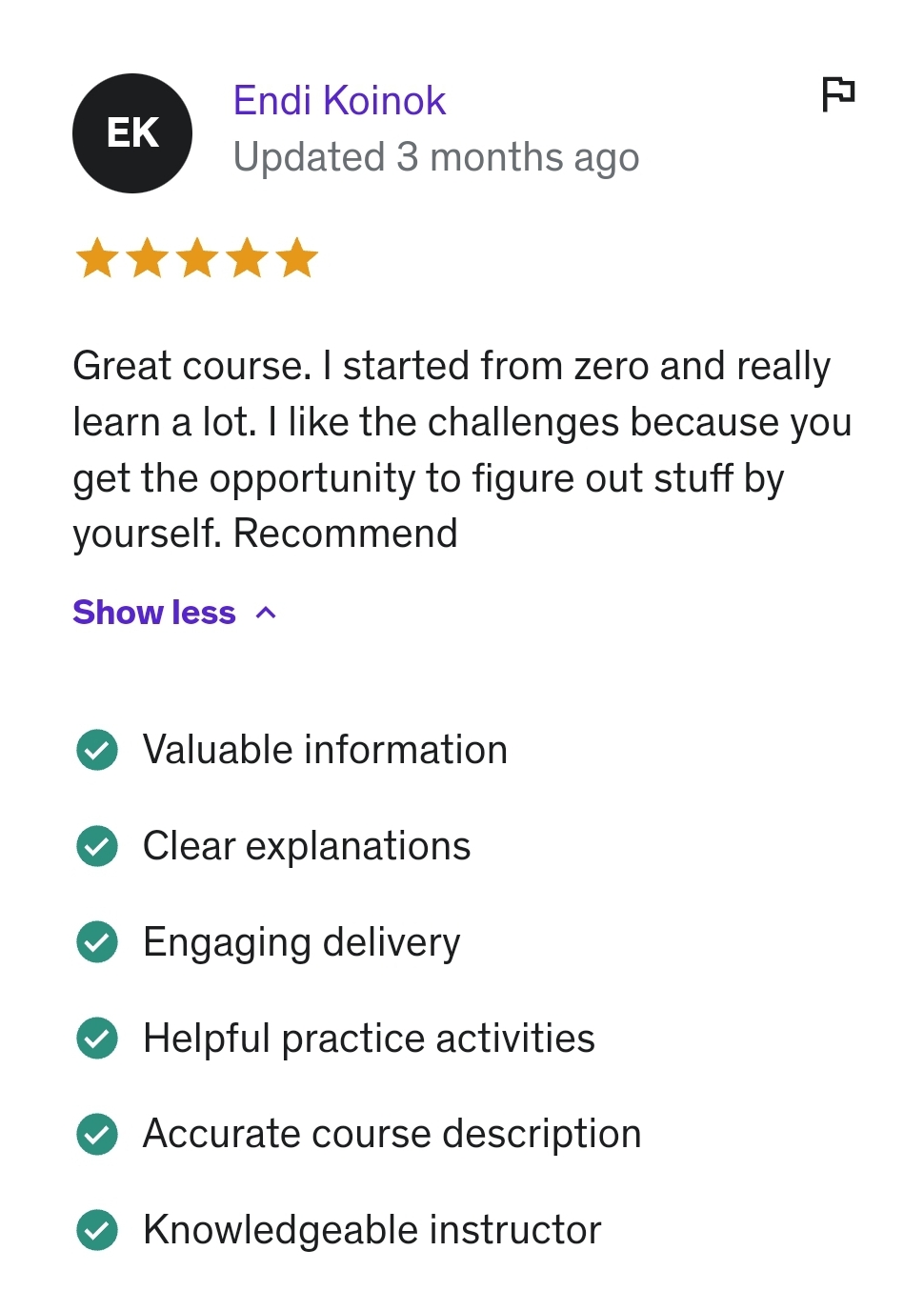
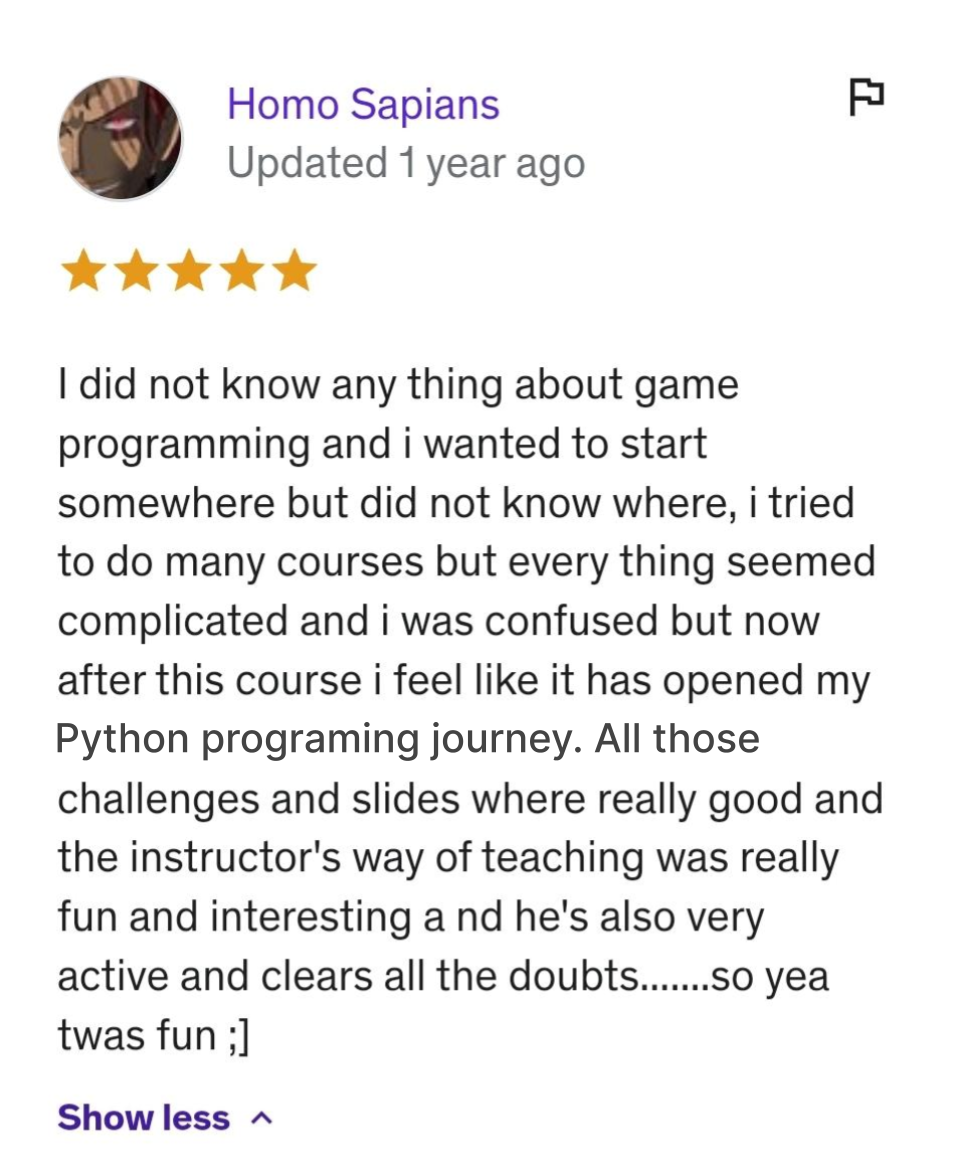
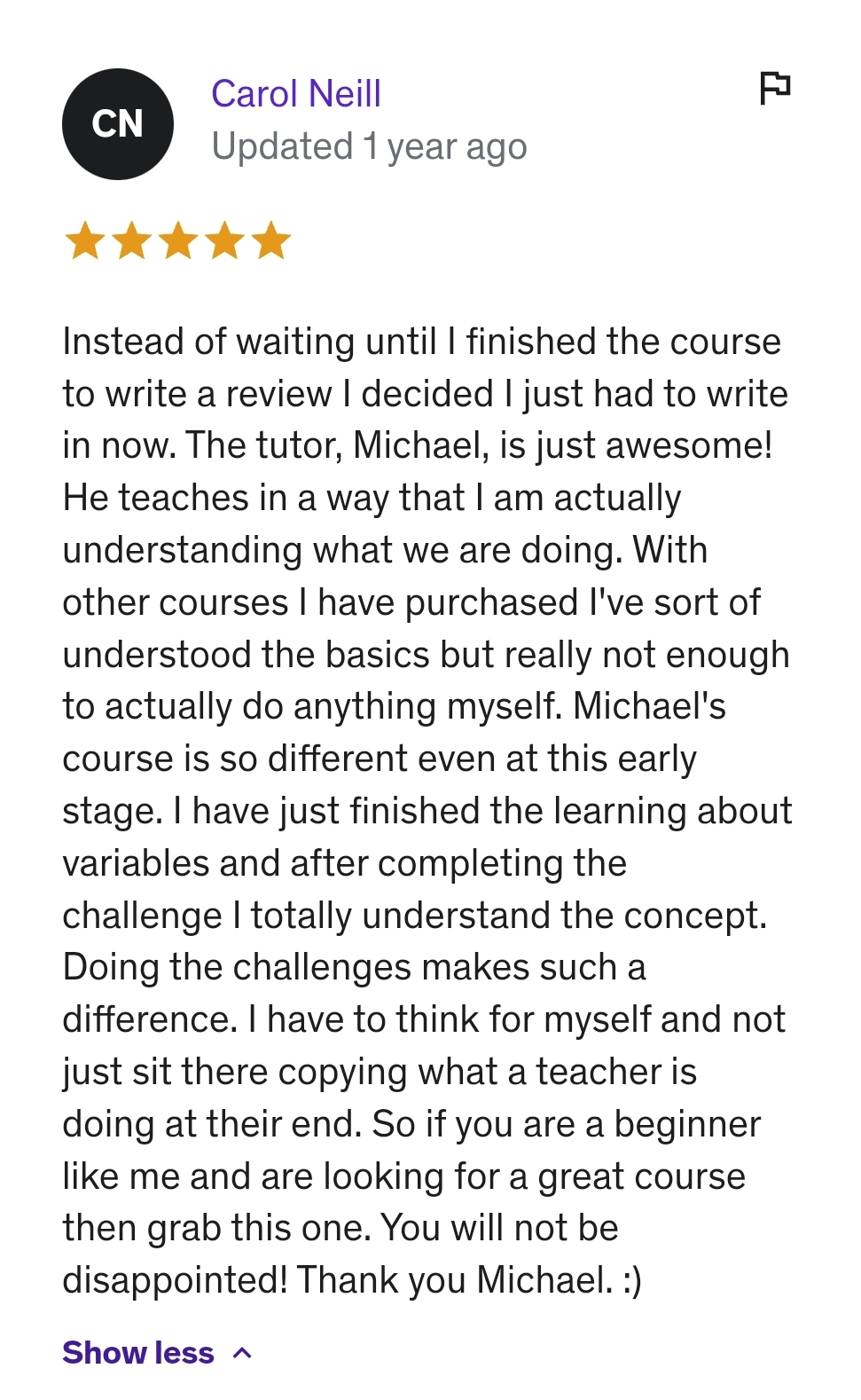
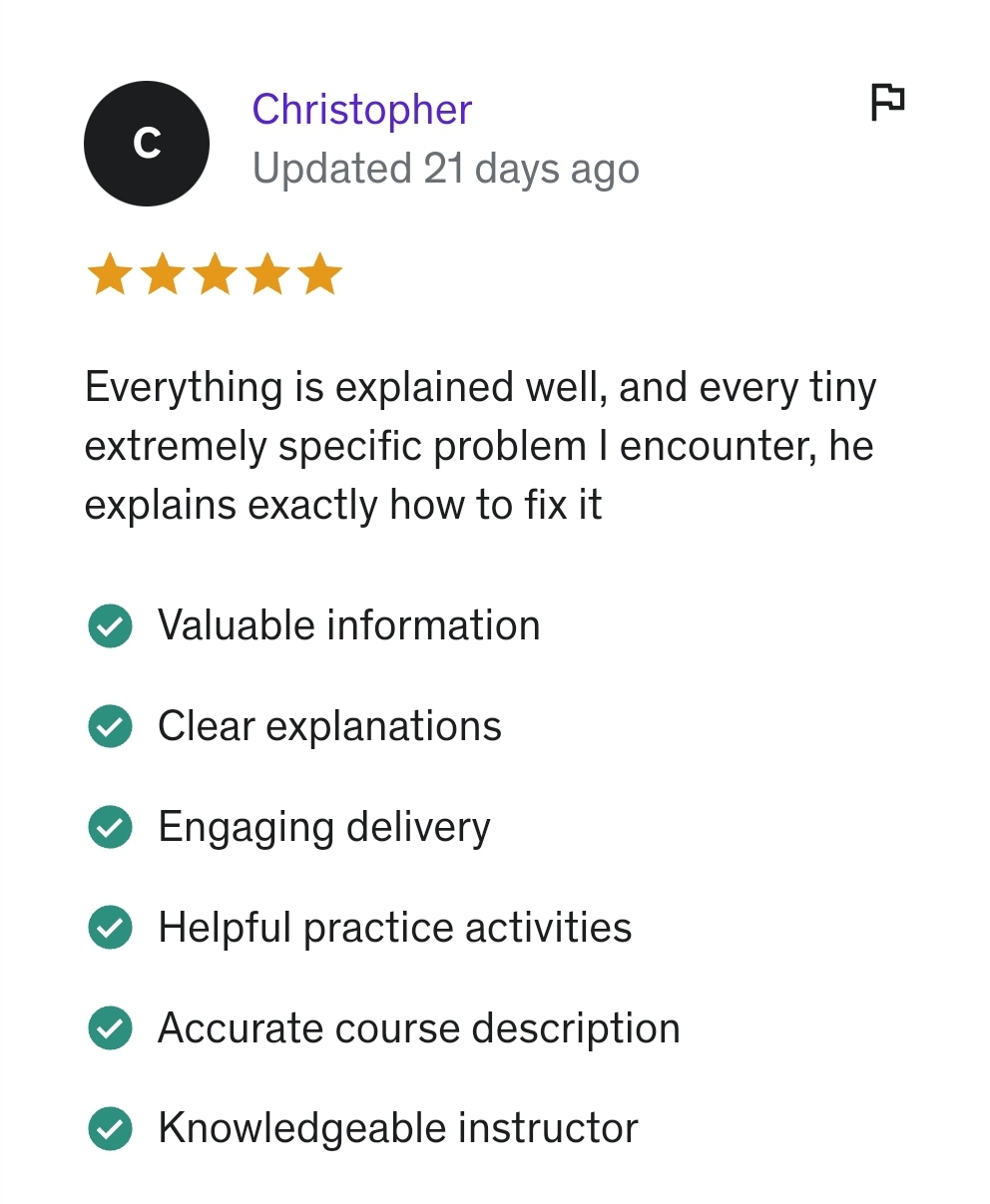
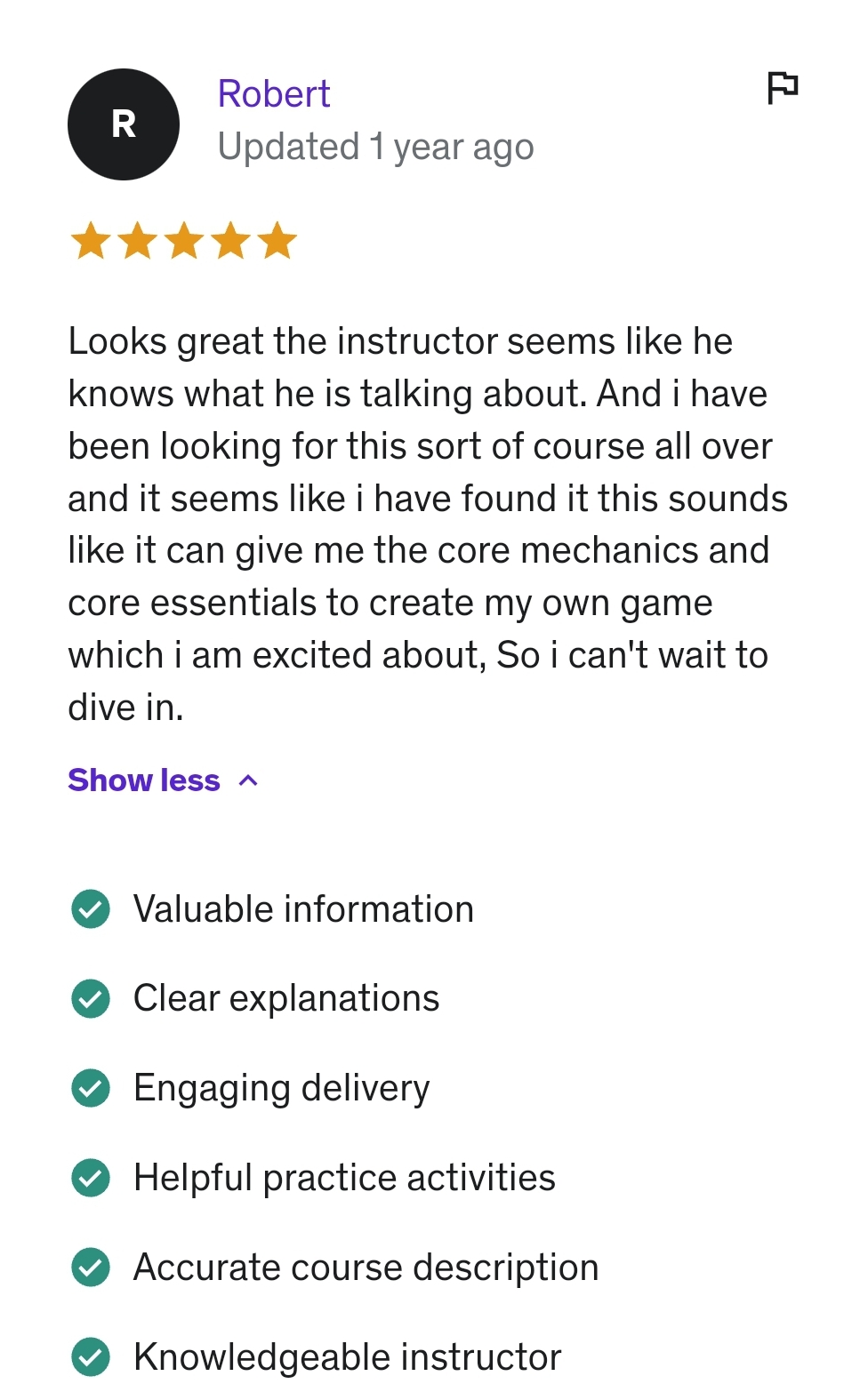
"Exceeded my Expectactions!"
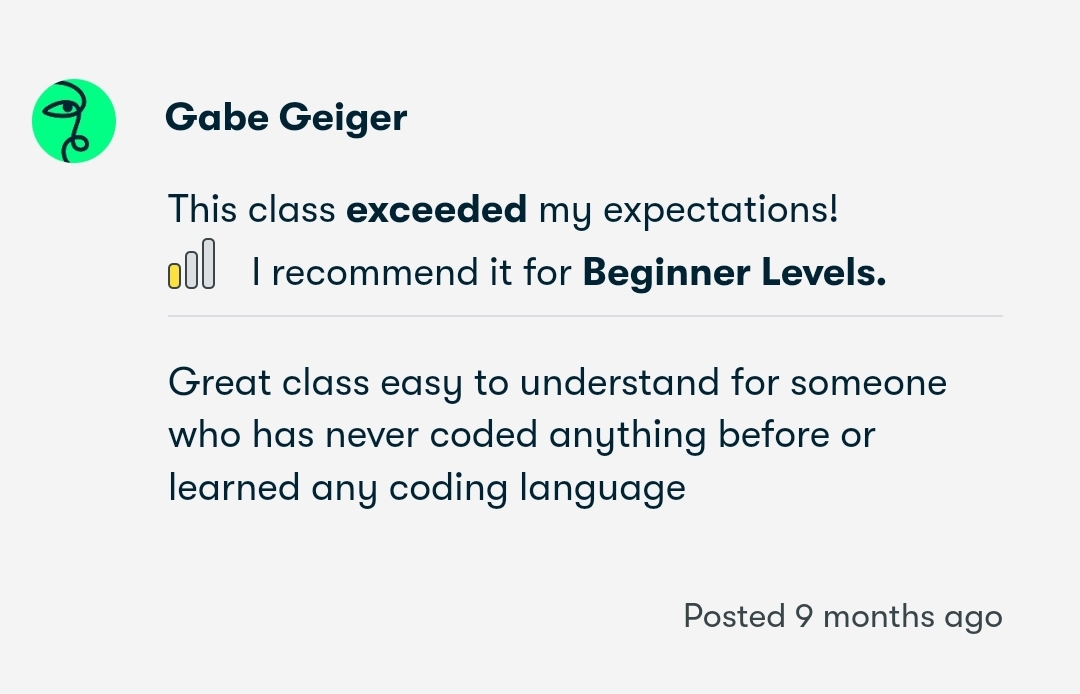
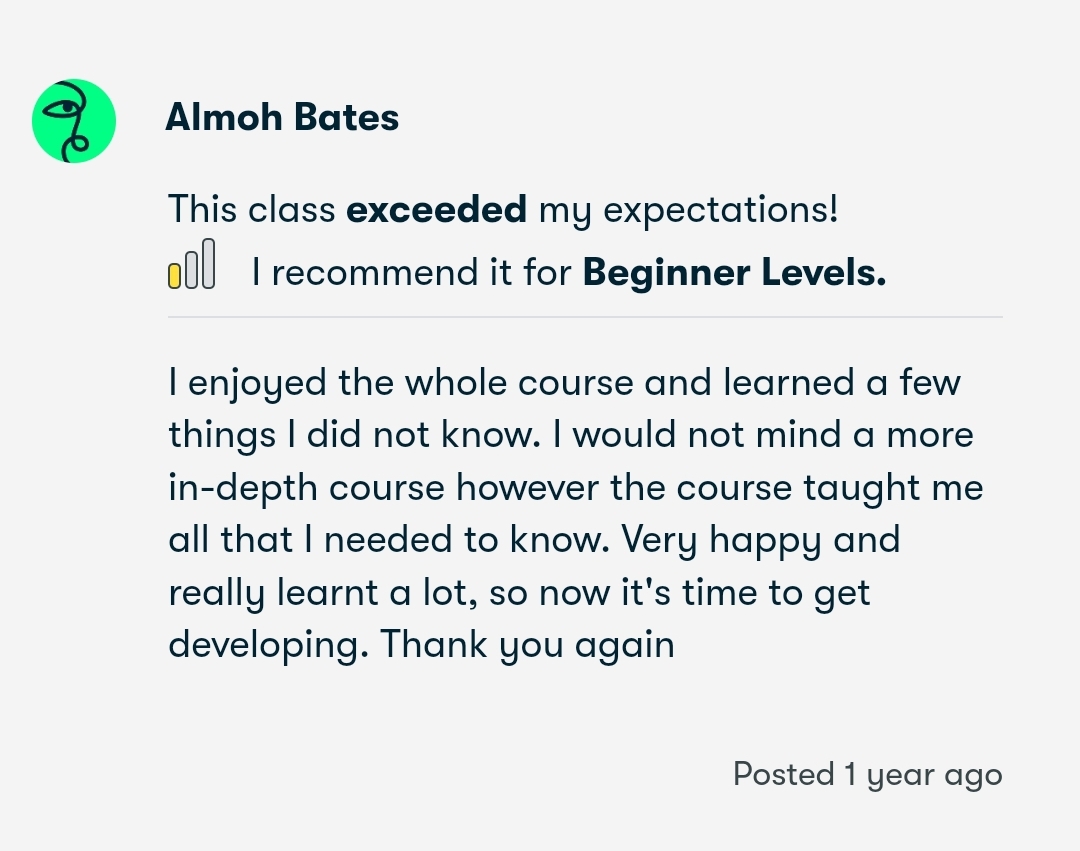
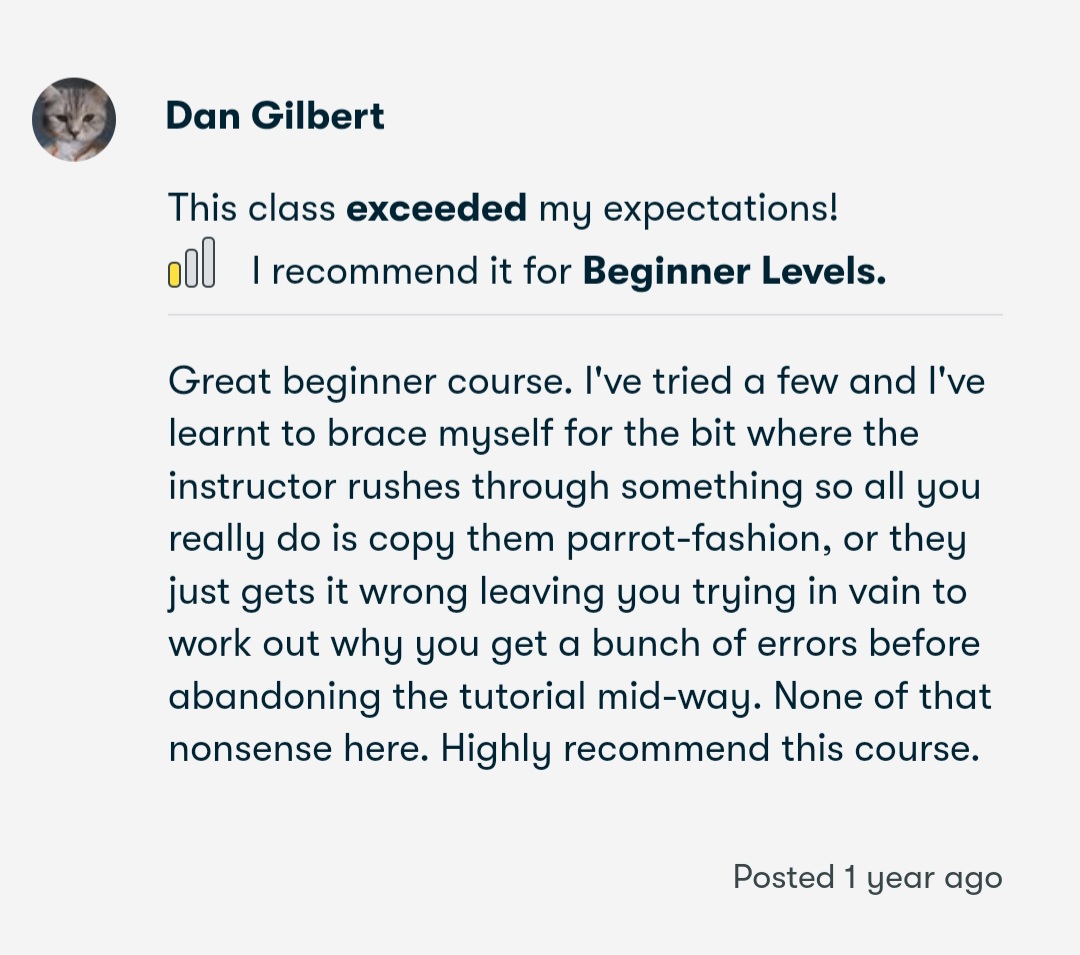
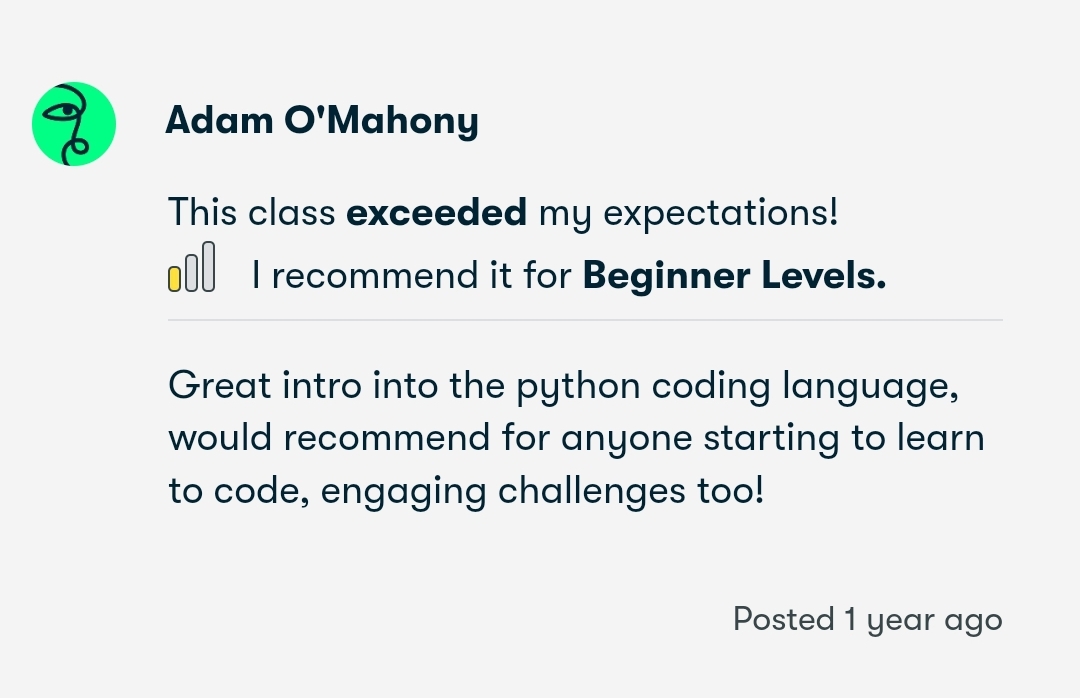
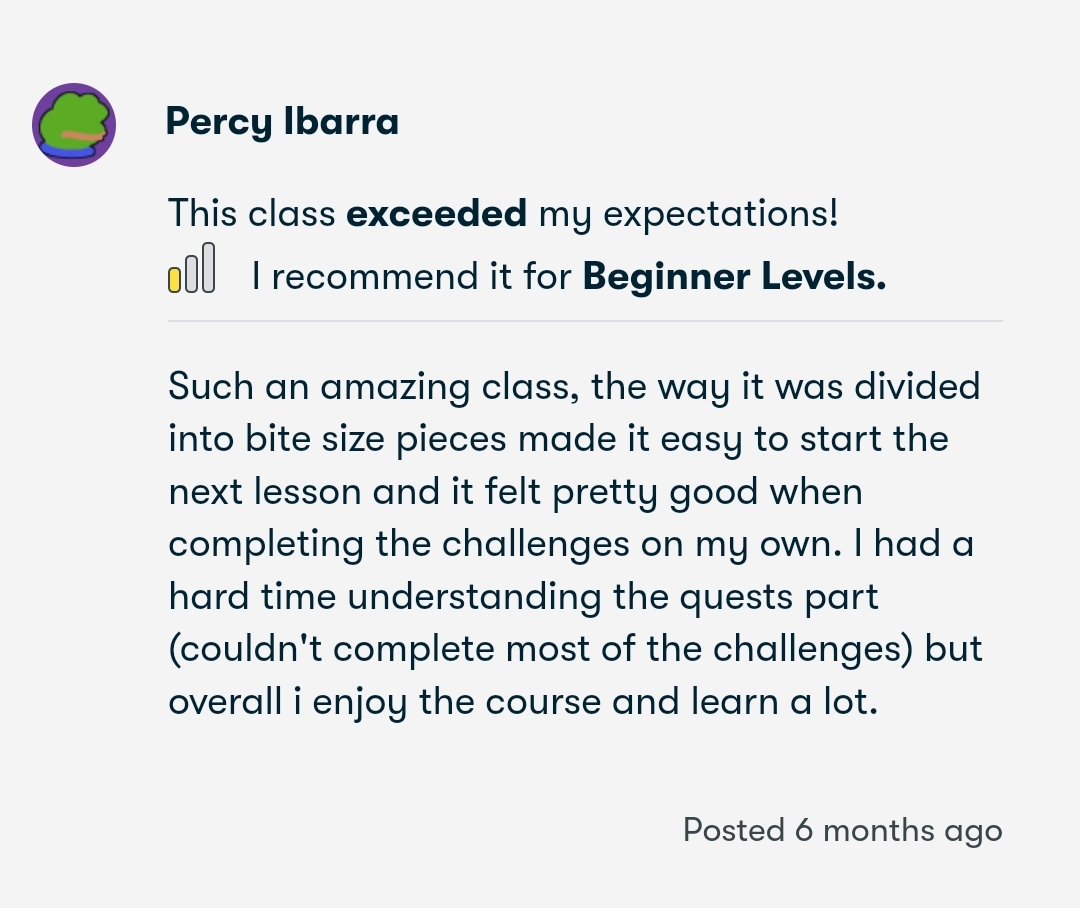
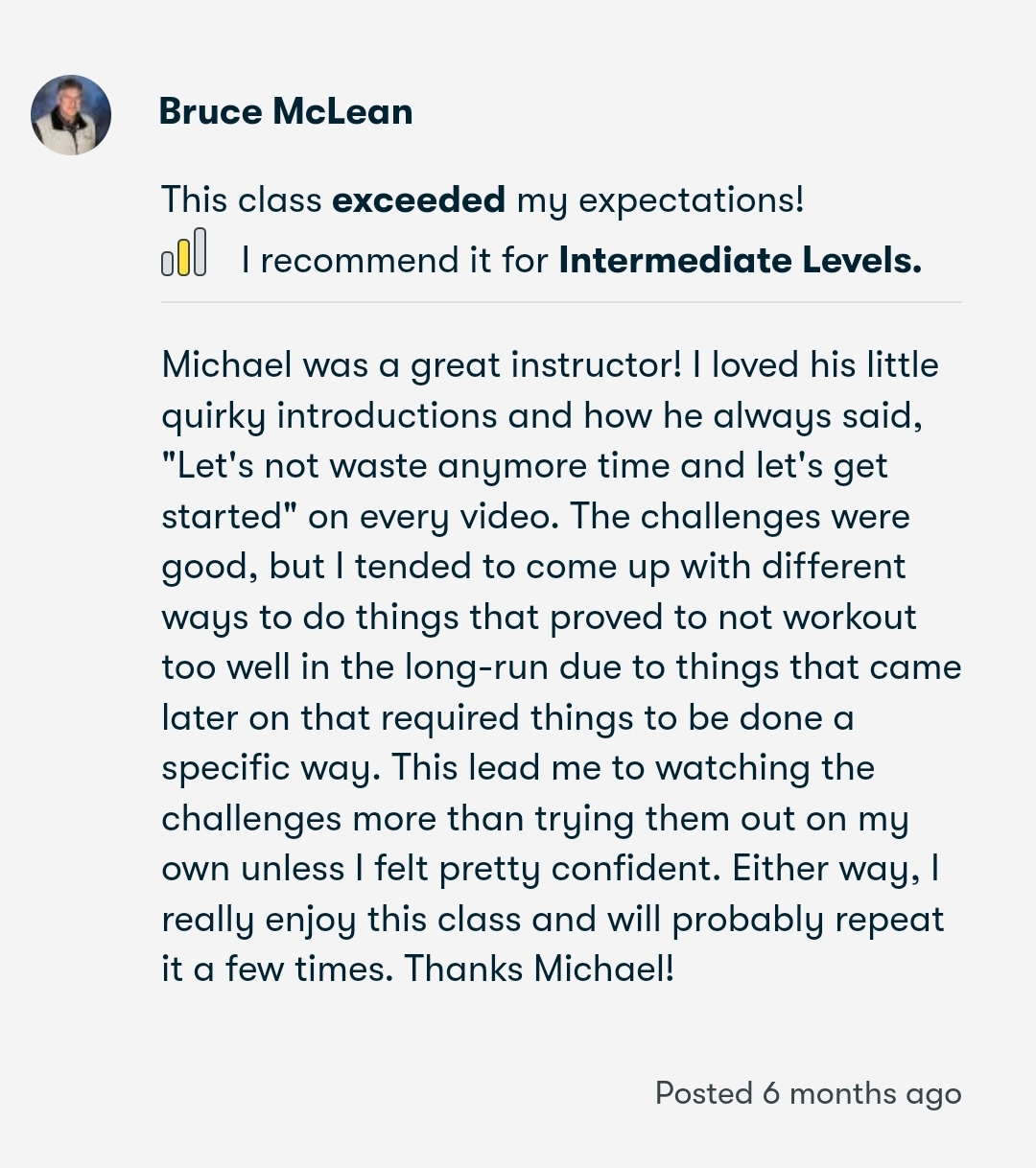
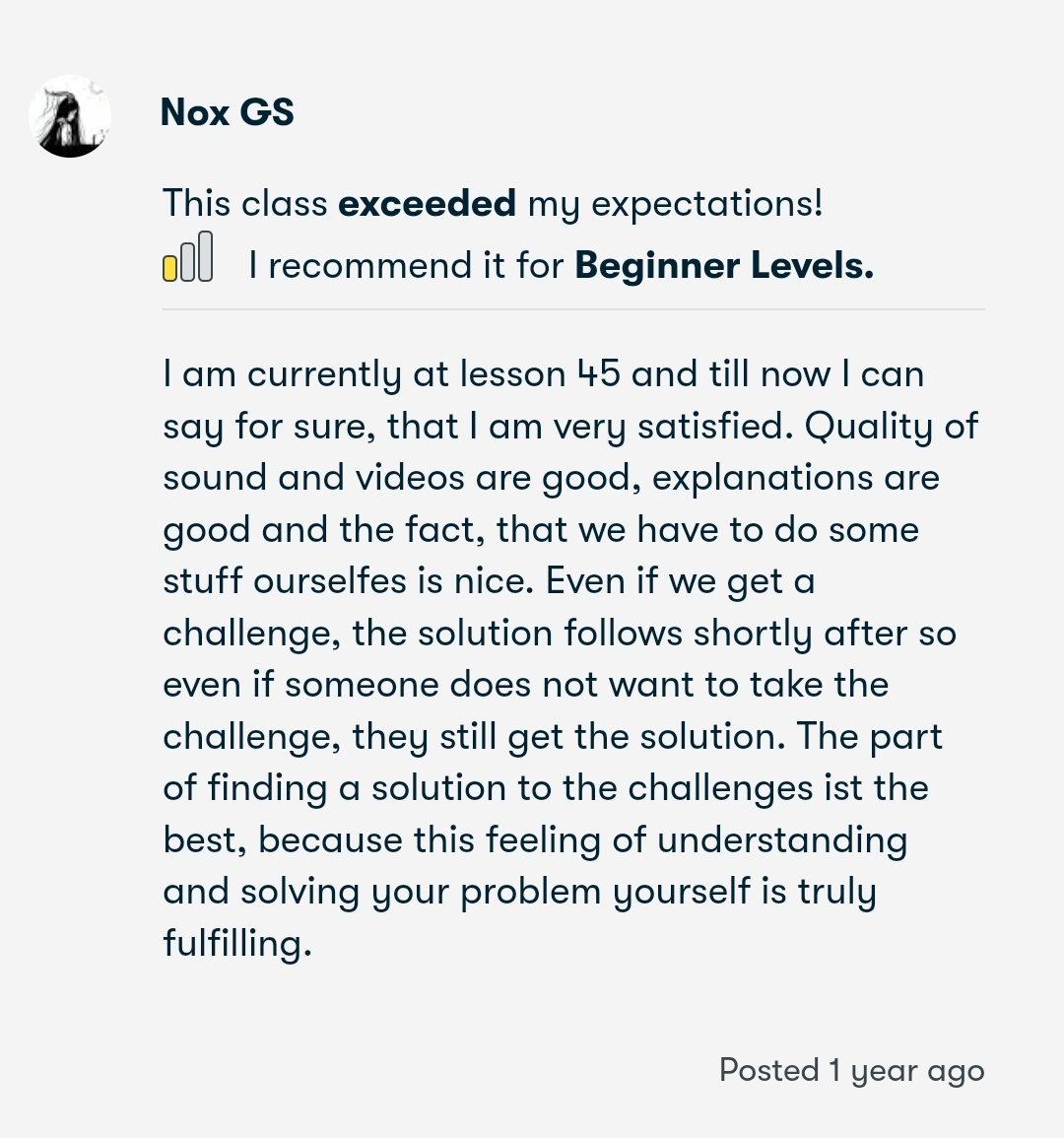
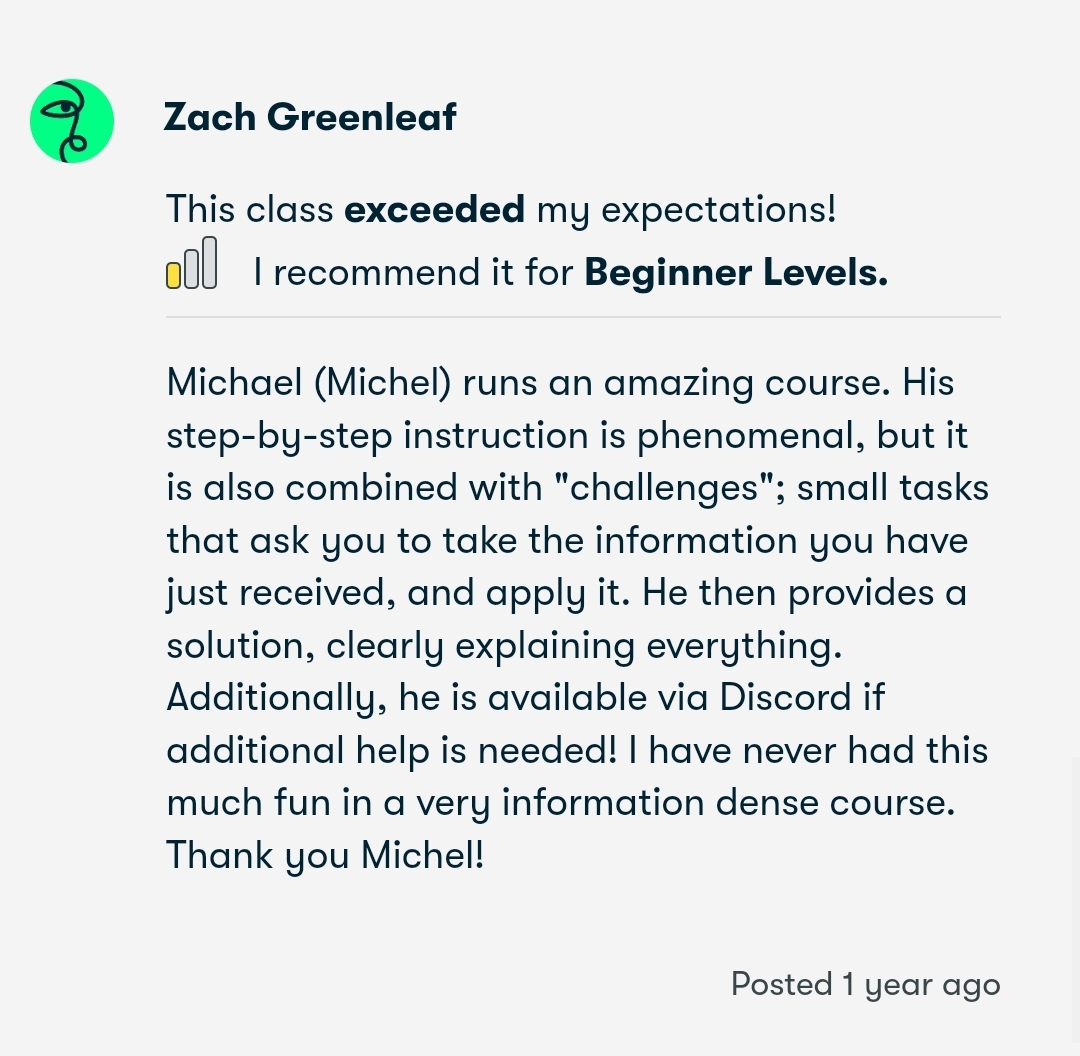
"A Wealth of Knowledge"
FAQ
After years of dedicated experience in the field of private Python tutoring, coupled with valuable feedback from thousands of students, constructive criticism, and our unwavering commitment to creating the most efficient Python programming curriculum, we proudly present our meticulously crafted MasterClass
At 2M Python Development, we believe in catering to individual needs and recognizing that everyone progresses at their own pace. That's why we offer a personalized strategy session, where we take the time to understand your specific requirements, evaluate your current Python proficiency, and assess your overall programming aptitude. Based on this assessment, we will match you with one of our highly trained instructors who possess extensive experience in teaching Python programming to students who were once in a similar situation to yours.
The duration of your Python learning journey depends on your personal goals and the level of proficiency you aim to achieve. For guaranteed results upon completion of our program, we recommend considering our Gold Package or the 30-hour private tutoring lessons. If your aspiration is to attain mastery of Python and delve into its intricate details, the 40-hour pack is the ideal choice. However, if you aspire to become a Python Guru, gain access to a plethora of advanced projects, and even secure an entry-level job as a Python developer, we highly recommend investing in the comprehensive 50-hour package.
Before someone starts with us, we consider a few important factors. We ask ourselves: Is this person serious? Will this masterclass meet their goals and aspirations? Are we willing to take the time to understand their situation before we start working together? Surprisingly, there are times when we decline people and don't accept their money if they don't meet our criteria.
So, the first thing you should do is BOOK A FREE CALL. It's a 10-minute call where we'll ask you a few questions about yourself and your goals. We'll also give you a brief introduction of what we're all about.
If you're interested and we find you meet our requirements, we'll then set up something called a Strategy Session. During this session, we'll have a demo lesson and discuss the specific lessons you'll take and the benefits you'll get from each one.
At that point, you'll have all the information to make a decision about continuing with us and choosing the package that suits you best.
When you choose a package, we'll talk about your availability, preferred learning schedule, and how many hours per week you want to dedicate.
And that's it! You're ready to start your journey with us.

Copyright © 2024 ALL RIGHTS RESERVED
Privacy Policy
Terms of Service


Book your FREE
Strategy Session NOW
In this session we will:
Evaluate your grasp of Python knowledge
Describe to you our teaching process
Create a tailor made program fit for you
Your email address is 100% secure